Electric Vehicles in India: Is Switching from Petrol Worth It?
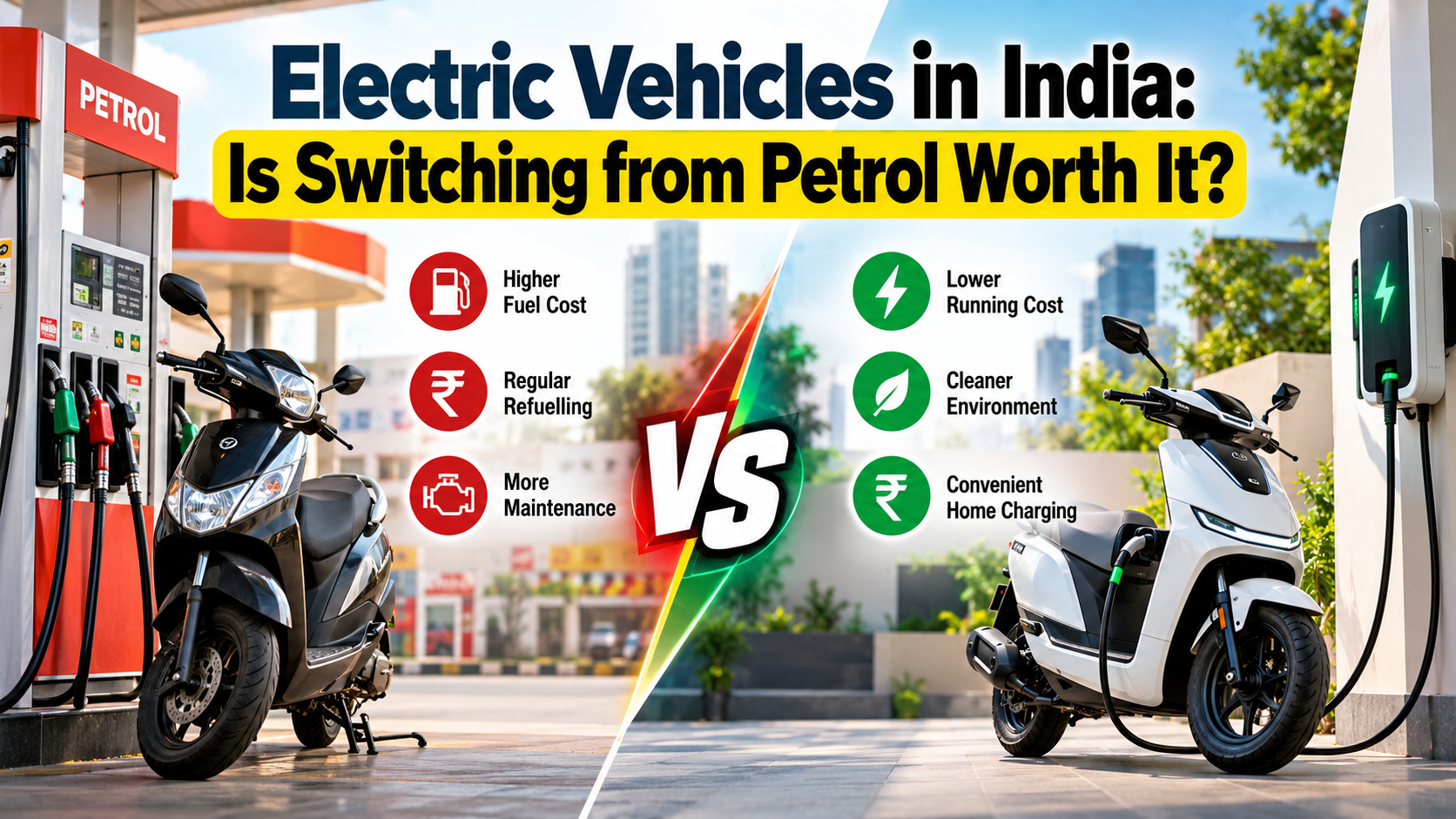
Electric vehicles (EVs) are becoming increasingly popular in India as people look for ways to reduce fuel expenses and adopt cleaner transportation. From electric scooters used for daily office commutes to electric cars designed for family travel, EVs are changing the way Indians think about mobility.
But one important question remains: Is switching from a petrol vehicle to an electric vehicle really worth it in India?
The answer depends on several factors, including your daily travel distance, budget, charging facilities, electricity prices and long-term ownership costs. Let's understand the advantages, disadvantages and financial considerations before making a decision.
Why Are Electric Vehicles Becoming Popular in India?
Rising transportation costs have encouraged many people to explore alternatives to petrol and diesel vehicles. Electric vehicles offer a different approach to personal transportation by using electricity instead of conventional fuel.
Another reason for their growing popularity is the availability of electric scooters, motorcycles and cars across different price categories. Buyers can now compare multiple models based on range, battery capacity, charging time and features.
Government initiatives supporting electric mobility and the gradual expansion of public charging infrastructure have also contributed to the development of India's EV market.
However, the benefits of switching to an EV depend on the individual buyer's requirements. An electric vehicle that works well for a daily city commute may not be equally convenient for someone who frequently travels long distances.
Electric Vehicle vs Petrol Vehicle: Which Is Cheaper?
Running cost is one of the main reasons people consider buying an electric vehicle.
A petrol vehicle requires regular fuel purchases, whereas an EV uses electricity to charge its battery. Depending on local prices and vehicle efficiency, electricity can cost less per kilometre than petrol.
For example, suppose petrol costs ₹100 per litre and a petrol scooter delivers a mileage of 45 kilometres per litre. Its fuel cost would be approximately ₹2.22 per kilometre.
Now suppose an electric scooter consumes 3.5 units of electricity to travel 100 kilometres, and electricity costs ₹7 per unit. Its electricity cost would be approximately ₹0.25 per kilometre.
Under these assumptions, travelling 1,000 kilometres would cost approximately ₹2,222 in petrol for the petrol scooter, compared with ₹245 in electricity for the electric scooter.
These figures are illustrative rather than guaranteed. Actual consumption varies by model, riding conditions, battery efficiency, charging losses and electricity tariffs. Public charging can also cost more than charging at home.
The difference in running costs can become significant for people who travel long distances every day. However, running costs are only one part of the total ownership expense.
What About the Purchase Price?
Electric vehicles can have a different upfront cost from comparable petrol models. Some electric scooters are competitively priced, while others cost more because of their battery capacity, technology and features. Electric cars generally require a much larger initial investment.
Buyers should compare the complete cost of ownership rather than choosing a vehicle based only on its advertised price.
Important expenses include the purchase price, loan interest, insurance, routine maintenance, charging equipment and possible battery-related costs. Resale value should also be considered because it affects how much money you may recover when selling the vehicle.
An EV with low running costs may still take several years to compensate for a higher purchase price. For someone who travels only short distances, the savings may not justify paying significantly more upfront.
How Much Can You Save by Switching to an EV?
The amount you save depends largely on how frequently you use your vehicle.
Consider a person who travels 1,000 kilometres every month. Using the illustrative assumptions above, a petrol scooter would require around ₹2,222 in fuel, while an electric scooter would use around ₹245 worth of electricity.
This represents an estimated energy-cost difference of approximately ₹1,977 per month, or around ₹23,724 per year.
These calculations exclude maintenance differences, financing, insurance, charger installation and battery-related expenses. The actual financial benefit could therefore be higher or lower.
People who travel more kilometres each month may have greater opportunities to save on energy costs. In contrast, someone who uses a scooter only occasionally may take much longer to recover the additional cost of buying an EV.
Advantages of Electric Vehicles
One major advantage of electric vehicles is their potential for lower running costs. Charging at home can be convenient and may cost less than buying petrol, depending on the applicable electricity tariff.
EVs also have fewer moving parts in their drivetrains than conventional petrol vehicles. They do not require engine oil changes, although tyres, brakes, suspension and other components still need maintenance.
Electric vehicles produce no tailpipe emissions while driving, which can help reduce roadside pollution. Their overall environmental impact, however, also depends on how the electricity is generated and how batteries are manufactured and recycled.
Another benefit is the driving experience. Electric vehicles deliver power smoothly and operate more quietly than many conventional petrol vehicles. This can make them comfortable for everyday city journeys.
Disadvantages of Electric Vehicles
Despite their benefits, EVs also have limitations that buyers should understand.
Charging can be inconvenient for people who do not have access to a suitable home or workplace charging point. Apartment residents may need permission and appropriate electrical infrastructure before installing a charger.
Charging also takes longer than refuelling a petrol vehicle. Although fast chargers can reduce waiting time for compatible vehicles, their availability varies by location.
Battery performance and long-term replacement costs are additional considerations. Buyers should examine the manufacturer's battery warranty, its coverage conditions and the availability of authorised service centres.
Range is another important factor. The distance an EV travels on one charge depends on the model, battery capacity, speed, weather, load and riding or driving style. Buyers should evaluate real-world range rather than relying entirely on advertised figures.
Is Charging Infrastructure Sufficient in India?
India's public charging network is expanding, but the experience differs from one city or route to another. Major urban areas may offer several charging options, while some smaller towns and highways have fewer convenient facilities.
Before buying an electric vehicle, check whether charging points are available near your home, workplace and frequently visited destinations.
For electric car owners, home charging can make daily use considerably more convenient. Electric scooter owners should also confirm that their model can be charged safely and conveniently where they park.
If your regular journeys include long-distance travel, plan your route around compatible charging stations and allow sufficient time for charging.
Are Government Subsidies Available for EV Buyers?
Government incentives have supported electric mobility in India, but eligibility depends on the vehicle category, scheme conditions and applicable dates.
Buyers should not assume that a subsidy mentioned in an older article or advertisement is still available. Check current announcements from the Ministry of Heavy Industries, the relevant state government and the vehicle manufacturer before finalising a purchase.
It is also important to compare the final on-road price after accounting for any incentives for which you are genuinely eligible.
Who Should Consider Buying an Electric Vehicle?
An electric vehicle may be a practical choice for people who travel regularly within a city, have access to reliable charging and intend to use the vehicle for several years.
Daily office commuters, frequent local travellers and delivery riders may benefit from lower energy costs when their vehicle's range and charging arrangements suit their work.
Families considering an electric car should evaluate their daily travel needs, parking arrangements, home charging options and requirements for longer journeys.
On the other hand, people who travel only occasionally, lack convenient charging access or frequently undertake long trips through areas with limited charging facilities may prefer a petrol vehicle or may need to compare other available options carefully.
How to Calculate Your EV Payback Period
Before purchasing an EV, estimate how long it would take for the running-cost savings to offset any additional upfront cost.
For example, if an electric scooter costs ₹20,000 more than a comparable petrol scooter and saves ₹1,000 per month in total running expenses, the simple payback period would be 20 months.
The calculation is:
Payback period = Additional upfront cost ÷ Monthly savings
This is a simplified estimate. A more accurate comparison should account for financing, insurance, maintenance, charging equipment, battery-related expenses and resale value over the same ownership period.
The calculation is particularly useful when comparing two vehicles with similar features and intended uses.
Final Thoughts: Is Switching from Petrol Worth It?
Switching from petrol to an electric vehicle can make financial sense for many Indian buyers, particularly those who travel frequently and can charge their vehicles conveniently. Lower energy costs, quiet operation and reduced tailpipe emissions are meaningful advantages.
However, EV ownership is not automatically cheaper for everyone. The purchase price, charging arrangements, battery warranty, range and expected ownership period all influence the final decision.
Before making the switch, compare suitable models, calculate your expected monthly expenses and consider how you will use the vehicle every day.
The best choice is the vehicle that fits your budget, travel requirements and charging access—not simply the one with the lowest advertised running cost.